

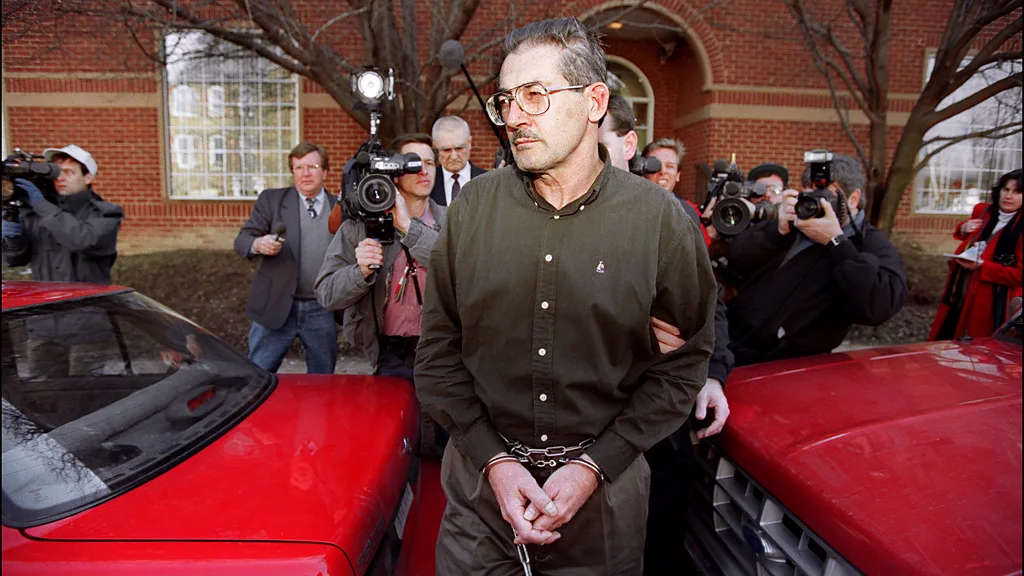
Aldrich Ames spent nearly a decade selling secret information to the Soviet Union, compromising more than 100 clandestine operations, and leading to the deaths of at least 10 Western intelligence assets. On 28 April 1994, the double agent was jailed for life. In February of that year, the BBC spoke to one of the spies who was betrayed by Ames, but who lived to tell the tale.
In 1985, Soviet agents working for the CIA suddenly began to disappear. One by one, these Western intelligence sources were picked up by the Soviet intelligence service, the KGB, interrogated and, very often, executed.
Afterwards, Gordievsky tried to work out who had given him up. "For nearly nine years I have been guessing who was the man, who was the source who betrayed me, and I didn't know any answer," he told the BBC's Tom Mangold in an interview with Newsnight on 28 February 1994. Two months later, Gordievsky would get his answer when veteran CIA officer Aldrich Ames stood up in a US courtroom, and confessed to compromising "virtually all Soviet agents of the CIA and other American and foreign services known to me".
On 28 April 1994, Ames admitted that he had divulged the identities of more than 30 agents spying for the West, and compromised more than 100 clandestine operations. Known to the KGB by his code name, Kolokol (The Bell), Ames's betrayal had resulted in the execution of at least 10 CIA intelligence assets including General Dmitri Polyakov, a senior official in Soviet army intelligence, who had supplied information to the West for more than 20 years. Ames, the most damaging KGB mole in US history, was convicted and sentenced to life without parole.
Just as British spy Kim Philby's exposure as a Soviet agent in the 1960s had rocked the UK establishment, it was "now Washington's turn to stare in disbelief at the extent of Ames's damage", said Mangold in 1994.
It was Ames's role as head of the CIA's Soviet counterintelligence department that had allowed him to cause such damage. It gave him almost unfettered access to classified information about the US's covert operations against the USSR and, crucially, the identities of its agents in the field. Ames's position had also meant that he could sit in on debriefings from other Western spy agencies. This is how the UK's most valuable spy, Gordievsky, a KGB colonel who was passing vital intelligence to two British services, MI6 and MI5, came into contact with him. These meetings would create the outlandish situation wherein "the top KGB defector was debriefed by the top KGB mole", said Mangold.
"The Americans were very thorough and really very good at debriefings," said Gordievsky. "I was enthusiastic. I liked the Americans. I wanted to share my knowledge with them, and now I realise [Ames] was sitting there. Which means that everything, all the new answers of my information, he must have passed to the KGB."
Ames had been exposed to the spy world at an early age. His father was a CIA analyst who helped his son get a job at the Agency after he had dropped out of college. But Ames's later decision to betray the intelligence service would be driven less by ideological misgivings as by his need for money.
Initially, Ames showed promise as a counterintelligence officer. He was first posted with his wife Nancy Segebarth, a fellow CIA agent, to Turkey in the late 1960s, where he was tasked with recruiting foreign agents. But by 1972 his superiors had called Ames back to CIA headquarters, feeling that he wasn't cut out for field work. Back in the US, he studied Russian, and was assigned to planning field operations against Soviet officials.
His father's struggles with alcohol had stalled his CIA career, and, similarly, Ames's own heavy drinking began to derail his progress. In 1972, he was discovered by another agent, intoxicated and in a compromising position with a female CIA employee. The situation was not helped by Ames's lackadaisical attitude to work, which saw him leave a briefcase full of classified information on a subway in 1976.
In an effort to get his career back on track, Ames accepted a second overseas posting to Mexico City in 1981, while his wife stayed at home in New York. But his behaviour and continued excessive drinking meant that he failed to distinguish himself as a CIA officer. In 1981, he was involved in a traffic accident in Mexico City, and was so inebriated that he was unable to answer the police's questions or even recognise a US embassy officer sent to help him. After a particular drunken profanity-laden argument with a Cuban official at a diplomatic reception at the embassy, his superior recommended the CIA assess him for alcohol addiction on his return to the US.
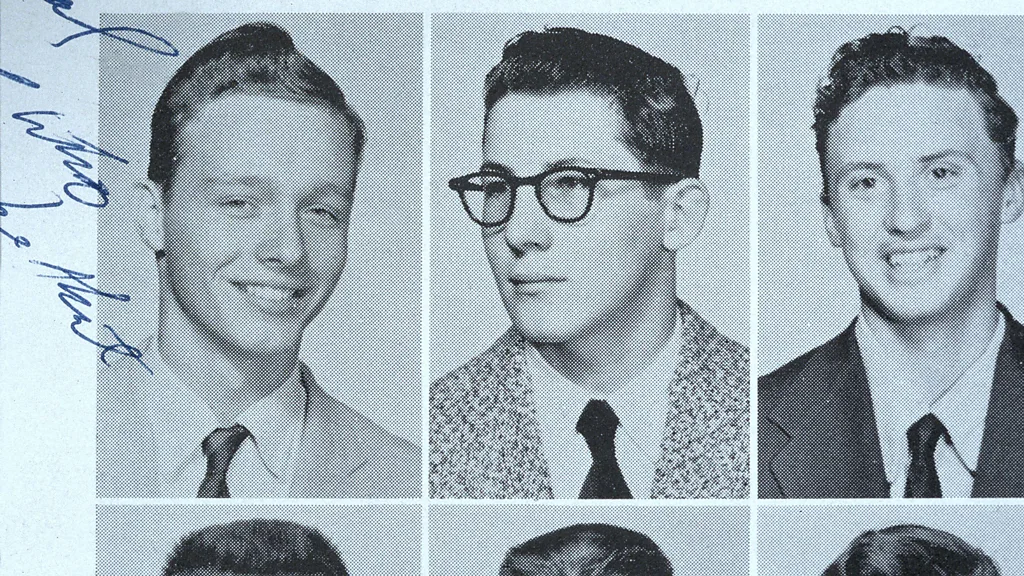 Aldrich Ames dropped out of college, but his father was a CIA analyst who helped him get a job at the Agency (Credit: Alamy)
Ames also continued to engage in extramarital affairs, one of which would prove to be a turning point for him. Toward the end of 1982, he began a relationship with a Colombian cultural attaché recruited to work for the CIA, Maria del Rosario Casas Dupuy. Their romance grew increasingly serious until Ames decided to divorce his first wife, marry Rosario and bring her back to the US with him.
Despite his less than stellar performance at the CIA, Ames continued to fail upwards. On his return to the Agency's headquarters in 1983, he was made counterintelligence branch chief for Soviet operations, giving him widespread access to information about clandestine CIA activities.
Ames had agreed as part of his divorce settlement to Nancy to pay the debts they had accrued as a couple, as well as paying monthly support. Compounded by his new wife Rosario's expensive tastes, her love of shopping sprees and her frequent phone calls to her family in Colombia, Ames's money problems spiralled out of control. He would later tell Arizona senator Dennis DeConcini that it was his escalating debts that led him to contemplate selling the secrets he had access to. "I felt a great deal of financial pressure, which, in retrospect, I was clearly overreacting to," Ames said.
"It was about the money, and I don't think he ever really tried to lead anybody to believe it was anything more than that," FBI agent Leslie G Wiser, who was involved in the investigation that led to Ames's arrest, told the BBC's Witness History in 2015.
On 16 April 1985, having had a few drinks to build up his courage, Ames walked straight into the Russian embassy in Washington DC. Once inside, he passed the receptionist an envelope containing the names of some double agents, documents showing his credentials as a CIA insider, and a note demanding $50,000. He would claim in a Senate report that he had initially believed this to be a one-time deal to get him out of his financial black hole, but he soon realised that he had "crossed a line, [and] I could never step back".
More like this:
• How Vladimir Putin rose to power in Russia
For the next nine years, Ames was paid to pass over a wealth of top secret information to the KGB. He would take classified documents – detailing everything from listening devices connected to Moscow's space facility to new state-of-the-art technology that was able to count Soviet missiles' nuclear warheads – wrap them in plastic bags, and simply carry them out of the CIA. Since his role involved official meetings with Russian diplomats, he was often able to meet his handlers face-to-face without arousing suspicion. He would also leave packets of classified documents in secret pre-arranged sites called dead drops.
"If he was going to make a dead drop, earlier he would place a chalk mark on a mailbox, for instance, and the Russians would see that chalk mark, and then they would know that the drop had been loaded with the documents," said Wiser. "Later, when they retrieved the documents, they would go and erase the chalk mark. He would then know that the transfer of documents was done safely and securely."
It was through Ames's leaking of secret intelligence information that the KGB would identify virtually all of the CIA's spies in the Soviet Union, effectively shutting down its US covert operations there. "I'm not aware of any other spy or mole in the US that has caused such a loss of human life in terms of human assets," said Wiser. The sudden disappearance of so many CIA assets did raise alarms and trigger the search for the mole within the Agency in 1986, but Ames would continue to slip under the radar for the best part of a decade.
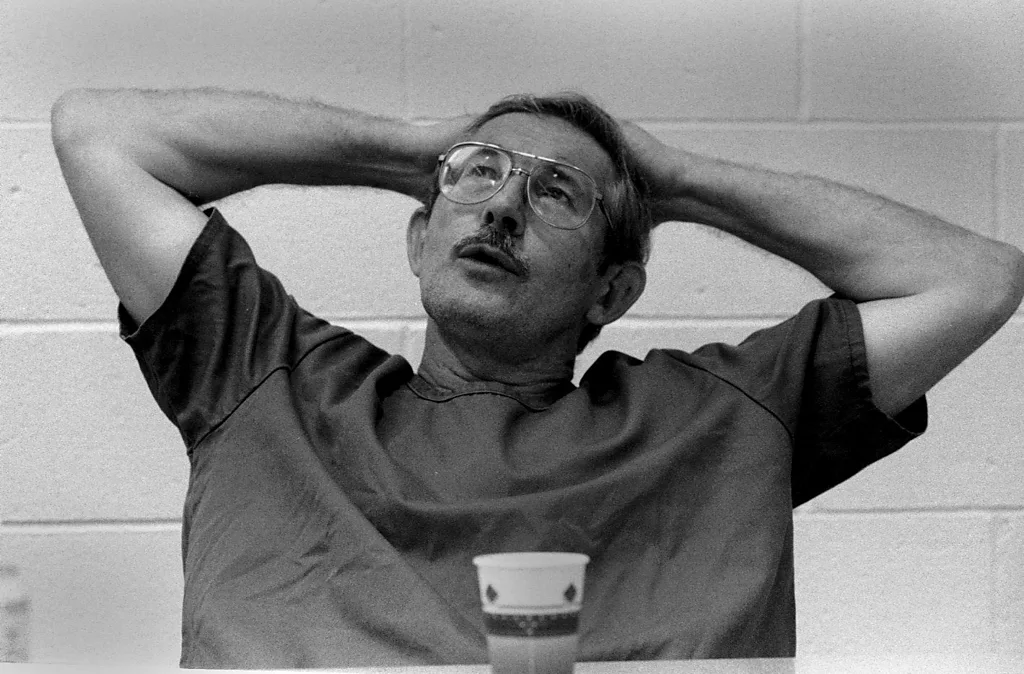 Ames is the highest-ranking CIA officer ever to be exposed as a double agent (Credit: Getty Images)
And he was paid handsomely for his treachery, receiving a total of about $2.5million from the Soviet Union. Ames made little attempt to hide his newfound wealth. Despite never having a salary of more than $70,000 a year, he bought a new $540,000 house in cash, spent tens of thousands of dollars on home improvements and purchased a Jaguar car. It would be his lavish lifestyle and spending that would place him in the spotlight, and lead to his eventual arrest by Wiser's FBI team in 1994.
After he was picked up by the FBI, Ames cooperated with the authorities. He detailed the extent of his spying activities in exchange for a plea deal that secured a lenient sentence for Rosario, who admitted that she had known about the cash and his meetings with the Soviets. She was released after five years. Ames, the highest-ranking CIA officer ever to be exposed as a double agent, continues to serve out his life sentence at a US federal penitentiary in Terre Haute, Indiana.
Up until his death, Ames showed little remorse for his actions or for the deaths that they led to. "He had a very high opinion of himself," said Wiser about Ames. "He regrets getting caught. He doesn't regret being a spy."
--
For more stories and never-before-published radio scripts to your inbox, sign up to the In History newsletter, while The Essential List delivers a handpicked selection of features and insights twice a week.
For more Culture stories from the BBC, follow us on Facebook, X and Instagram.

What the Nigella Lawson effect
What joining Channel 4‘s famous tent could mean for the TV cook‘s career and the baking show.(2 )Readerstime:2026-02-15
Actor Ross Kemp to return to E
Kemp plays the infamous Grant Mitchell in the long-running soap.(2 )Readerstime:2026-02-15
Your 2026 guide to festivals a
BBC Introducing‘s Daniel Pascoe shares the best music festivals in the South West this summer.(2 )Readerstime:2026-02-14
How America's Next Top Model b
The modelling contest hosted by Tyra Banks was a global phenomenon. But it also featured many shocking and questionable moments.(2 )Readerstime:2026-02-14Why women are drawn to gay ero
 Hockey romance Heated Rivalry has been a hit among straight female viewers – and it will likely lead to more queer love stories in film and TV.2026-01-20
Take That's new documentary te
 The band‘s new Netflix show contains a surprise new song, but much of the story has been told before.2026-01-27
Bad Bunny shoots up UK charts
 The Puerto Rican superstar has achieved a new career best in the UK albums and singles charts.2026-02-14
How the 1973 oil crisis made N
 When an oil embargo rocked the US, the president‘s radical solution was to make citizens start their working days an hour earlier – even in the darkness of midw...2026-01-05