

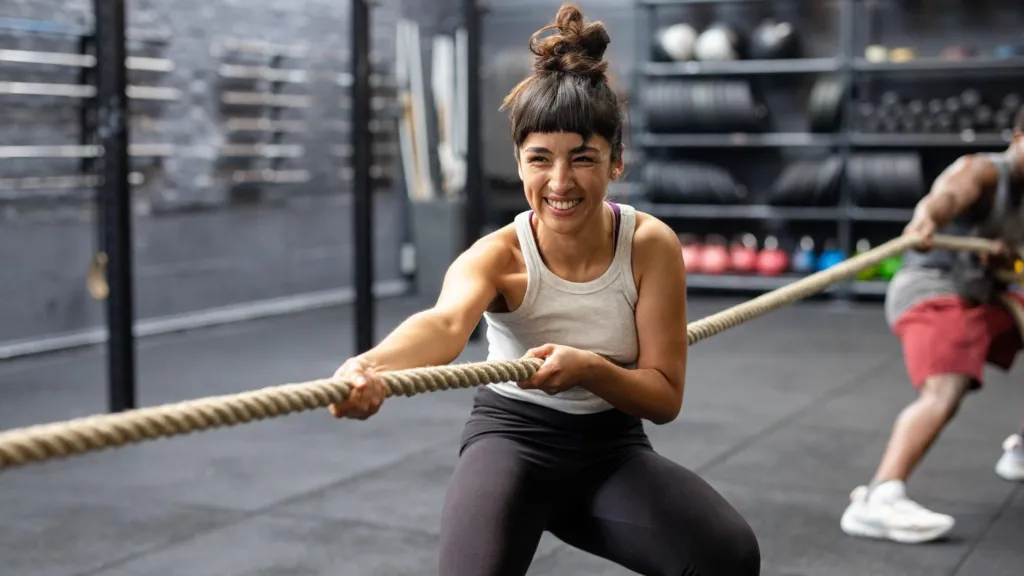
Don't put all your eggs in one basket when it comes to exercise - doing a variety of different physical activities every week is the key to boosting your health and living longer, a study suggests.
After tracking the weekly exercise habits of 110,000 men and women in the US for 30 years, researchers found active people who did the greatest variety of exercise were 19% less likely to die during that time than those who focused on one activity.
That effect was greater than for individual sports like walking, tennis, rowing and jogging.
The total amount of exercise you do is still key, experts say, but doing a range of activities you enjoy can bring lots of benefits.
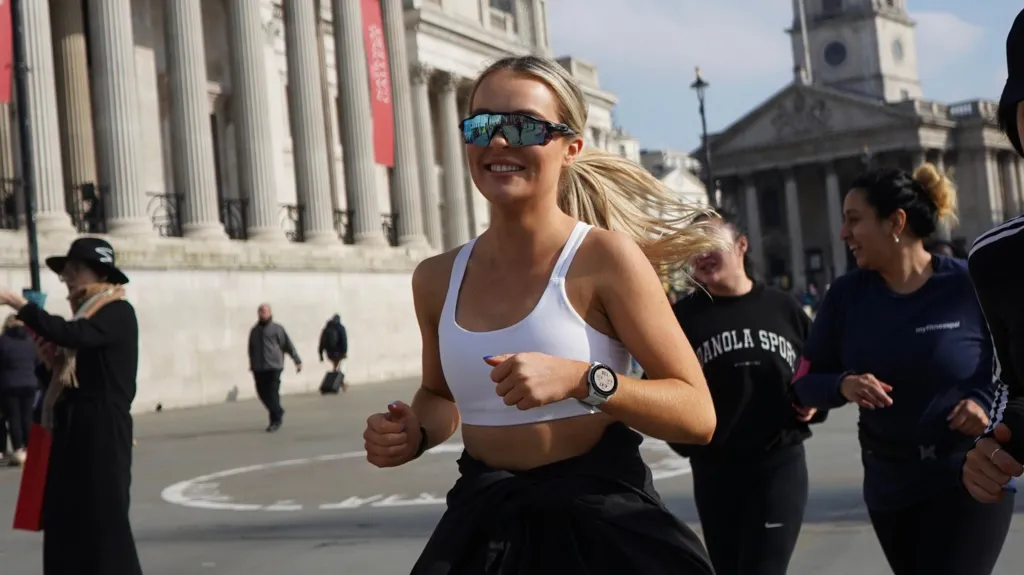 Maddie is a runner who also enjoys yoga, tennis and triathlon
Maddie Albon, 29, a global marketing manager who lives in London, does triathlons in her free time - but that's just for starters.
Her other sports include tennis, spin classes, yoga, pilates and lifting weights.
"Each different exercise offers something different," she says.
"You need to have the variety to be good at one sport - to be good at running you need to be weight training."
As well as the physical health benefits, Maddie - who's from New Zealand - finds the mix of activities helps her mood.
"Sometimes I don't have the energy for an intense session so doing that yoga to unwind, relax, it really helps my mental wellbeing."
"It's nice to have those other options to be moving your body and really dedicating that time for yourself in the day," she told the BBC.
Maddie took up triathlons last year and says she'd now like to try out some team sports, because they can be "a bit more social" than some of the current exercises she does.
Being active is already known to benefit our physical and mental health and help reduce the risk of developing a number of diseases affecting the heart, the blood vessels and the lungs. Exercise can also reduce the chances of dying early from some cancers.
"It's important to keep a high level of total physical activity, and on top of that, diversifying the types of activities may be more beneficial," said Dr Yang Hu, from Harvard School of Public Health, lead author of the study in the journal BMJ Medicine.
"Combining activities that have complementary health benefits [such as resistance training and aerobic exercise] can be very helpful," he added.
Aerobic activities raise your heart rate and make you breathe more quickly. They include brisk walking, riding a bike, playing tennis, dancing, hiking or mowing the lawn.
Vigorous exercise makes you breathe hard and fast. Examples are running, swimming, football, hockey, gymnastics or walking up stairs.
Exercises which strengthen the muscles include yoga, lifting weights, tai chi, sit-ups, energetic gardening and carrying heavy shopping bags.
For the research, more than 70,000 nurses aged 30-55 and 40,000 health professionals aged 40-75 were asked to provide information on activities they did every week, like walking, jogging, running, cycling, swimming, rowing, tennis and squash.
They filled in questionnaires every two years, and included how much weight training exercise they did, as well as lower intensity exercise like yoga, and other activities such as gardening and climbing stairs.
After crunching the numbers, the researchers found that most individual types of exercise reduced the risk of death from any cause. But people who took part in the widest mix of activities fared even better.
Their risk of death from cancer, heart disease, lung illnesses and other causes was 13-41% lower than other people's.
The research also found six hours of moderate activity or three hours of vigorous exercise was the optimum amount of exercise each week, after which the benefits levelled off.
Although the study is large and physical activity was measured repeatedly, the research does have limitations. It can't rule out that people's health may have influenced the exercise they do, rather than the other way round, although it did try to account for a range of lifestyle factors.
Limerence: When a crush become
Overwhelming, distressing, all-consuming: this little-known form of romantic longing can have a devastating impact.(2 )Readerstime:2026-02-14
The lifelong benefits of makin
From helping people cope with age-related disorders to altering our perception of physical pain, music‘s impact on our bodies can ring loud.(2 )Readerstime:2026-02-13
Can a pulse of electricity to
Scientists have discovered how to make people less selfish - slightly and temporarily - by stimulating two areas of the brain.(2 )Readerstime:2026-02-13
They met while pregnant but th
Sophie and Beth had to cope with the loss of their sons, while under the care of UH Sussex NHS Trust.(2 )Readerstime:2026-02-12Why rituals are so important f
 Michael Norton has spent decades studying why human relationships last. Sharing rituals – from a clink of a glass to Christmas Day traditions – have a powerful ...2024-12-19
Why it's harder to find love t
 Finding a long-term partner is trickier than ever, argues Paul C Brunson, author of the book Find Love.2024-04-11
Why your best qualities can gi
 The qualities that make us stand out the most, and the main reasons that people find us attractive, can be a blessing and a curse. Sometimes they can become a r...2025-02-23
The unseen damage from heading
 Why sports stars who head the ball are much more likely to die of Alzheimer‘s, Parkinson‘s and motor neurone disease.2026-01-07