


Billionaire Manchester United co-owner Sir Jim Ratcliffe has been criticised by Sir Keir Starmer and others for saying the UK had been "colonised by immigrants".
The use of the term colonised in the interview with Sky News on Wednesday was followed by an apology from the Ineos boss if his "choice of language has offended some people".
BBC Verify has been examining some of the claims he made on immigration, benefits and energy.
This claim is incorrect.
UK population figures are compiled by the Office for National Statistics. Its mid-year 2025 provisional estimate was 69.4 million, compared with 66.7 million in 2020 - an estimated increase of 2.7 million people, not 12 million.
The UK population was last estimated to be 58 million in 1995. So that 12 million increase is over more than three decades. Since 1999 migration has been a bigger contributor to population growth than births in most years.
Between 2020 and 2023 net migration accounted for almost all (98%) of UK population growth, according to analysis by Oxford University's Migration Observatory.
 Sir Jim has been criticised by Sir Keir Starmer and others for saying the UK had been "colonised by immigrants".
Sir Jim was also critical of the UK economy saying "you can't have an economy with nine million people on benefits".
However, a large of portion of those claimants were working and their incomes were topped up by benefits such as Universal Credit (UC) and housing benefit.
When it comes to people receiving benefits because they were out of work, the figures suggest there were about 6.5 million claimants, not nine million.
However, it is true that the number of people on benefits has increased over recent years.
Whether migrants cost "too much money", as Sir Jim also claimed, is a matter of intense debate.
When BBC Verify previously looked into the economic impact of migrants, Ben Bridle from the Migration Observatory told us their contribution depended on many factors.
This includes their age, earnings, their use of public services, and how long they stay in the UK.
"For example, many migrants have a positive impact on public finances when they are young and can't claim benefits, but a negative impact later as they age, use the NHS more, and get access to benefits," he said.
Immigration has been high compared with previous decades. But the numbers dropped sharply in Labour's first year in office, much of which was attributed to restrictions to visas and other measures introduced at the tail end of the previous Conservative government.
Net migration (the number of immigrants, minus the number of people emigrating) to the UK reached record levels after Brexit, peaking at 944,000 in the 12 months to March 2023.
However, the latest provisional estimate shows that in the 12 months to June 2025, net migration stood at 204,000 - 78% lower than the 2023 peak. Experts believe it could decline further.
Sir Jim is pretty much right about the comparison of energy prices with the US.
We asked the International Energy Agency (IEA) for figures for the two countries and they gave us prices for the fourth quarter of 2025.
For industrial electricity, the price in the UK was 3.7 times the US figure.
For industrial natural gas, the multiple was 4.5 times.
Sir Jim went on to say "carbon taxes" have quadrupled since 2020.
It is true that carbon prices rose sharply, but they are not four times higher now.
After Brexit, the UK left the EU's carbon market and launched its own one in 2021, allowing companies to buy and sell carbon credits.
The carbon price started at £22 per tonne of CO2, peaked at £97 per tonne during the 2022 energy crisis and is now around £52 per tonne - about two and a half times today.
This is not correct, according to World Bank data.
In 1995, just over 15% of the UK's economic output - known as gross domestic product (GDP) - came from manufacturing
That's ten percentage points lower than the figure Sir Jim claimed.
He went on to say manufacturing also accounted for about 25% of GDP in Germany in 1995 and that the figure remained about "the same today", whereas it had fallen to about 8% in the UK.
The World Bank data shows that while Sir Jim's figures are not exactly right, he is not far off.
It shows manufacturing accounted for 20% of Germany's GDP in 1995, whereas the latest data for 2024 shows it has dropped just two percentage points to 18%.
The UK, meanwhile, has dropped to 8% - the same figure Sir Jim used.
Additional reporting by Ben Chu, Anthony Reuben and Nicholas Barrett


'My mum took the pressure off
Actress Wunmi Mosaku is nominated for an Oscar for her role as Annie in the vampire horror Sinners.(0 )Readerstime:2026-02-15
Gallery's entire art collectio
The art gallery‘s bosses say it is people‘s first opportunity in decades to see the full collection.(0 )Readerstime:2026-02-15
The Instagram-friendly shoppin
Merry Hill is using leisure and entertainment to increase its customer base, the manager says.(0 )Readerstime:2026-02-15
Should stolen Shakespeare foli
The damage caused when Durham‘s First Folio was stolen remains - for now.(0 )Readerstime:2026-02-15Savannah Guthrie's brother ren
 Nancy Guthrie, the 84-year-old mother of an NBC News presenter, is believed to have been abducted from her home in Tucson, Arizona.2026-02-06
Italian police arrest proteste
 At least six people have been detained a week after a different demonstration in Turin turned violent.2026-02-08
How tiny Slovakia became a car
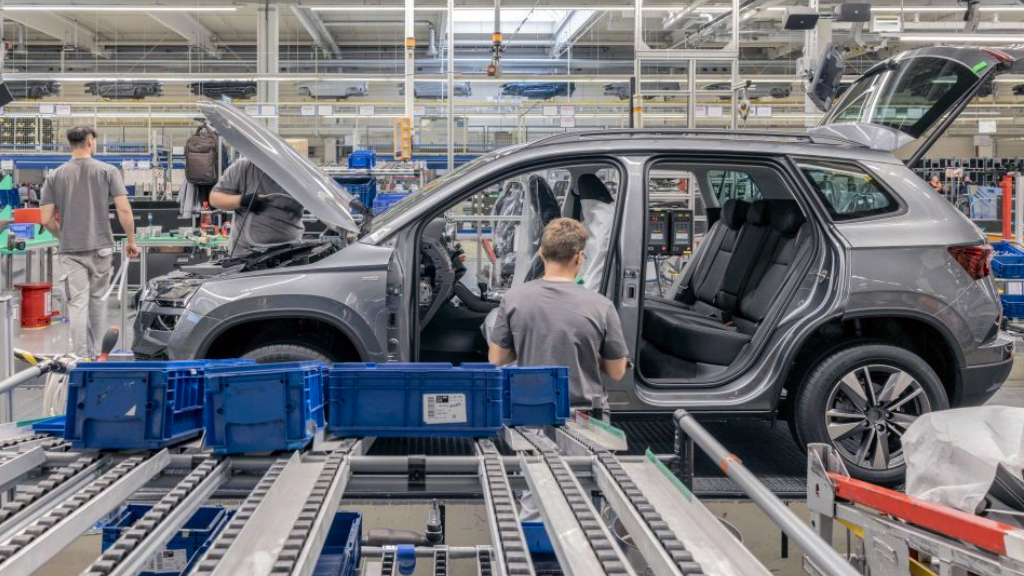 Almost a million cars a year are made in Slovakia, where companies including Kia and Volkswagen have factories.2026-01-22
Red eyes and black beaches: Ho
 A major oil spill which killed thousands of birds is still being debated, three decades later.2026-02-15