

 (Credit: Getty Images)
Once dismissed as a failed postmodern utopia, the Sicilian town of Gibellina is preparing for a year-long programme of exhibitions, performances and artist residencies. But can art finally bring life back to a place conceived as an art utopia?
The theatre straddles the road, a hump-backed concrete leviathan dominating the skyline. Designed by Italian sculptor Pietro Consagra, Teatro is one of the most iconic buildings in Gibellina – but it looks more like an abandoned multistorey car park than a theatre. Built in the first half of the 1980s, it remains unfinished some 40 years later. I've never seen any building like it.
Teatro is one of hundreds of neglected artworks and postmodern buildings scattered through the town, which was rebuilt in the 1970s and reimagined as an art utopia, with sculptures and architectural designs on every corner. Yet, this open-air museum receives few visitors; not many holidaymakers think to take a day trip from Palermo or the white-sand beach of San Vito Lo Capo.
In 2026, however, that is expected to change. Italy has named Gibellina its first-ever Capital of Contemporary Art, launching a year-long programme of exhibitions, performances and artist residencies designed to transform the town's long-dormant buildings and public spaces. For travellers, it offers a rare chance to experience a place mid-transformation – part open-air museum, part working cultural experiment – at a moment when the town is launching an urban revival.
Teatro was being prepared to reopen as an exhibition space when I visited in November, with workers building steps to the upper floors and barriers in front of the windows, which otherwise offered only a vertiginous drop onto the road below. I noticed graffiti flowering up the walls and pools of rainwater collecting at the bottom of ramps. Andrea Cusumano, the director of the year's programme, showed me around. An artistic polymath who has conducted orchestras, published poetry, directed plays and created art installations around Europe, he swept through the space in a long black coat, switching easily between English and Italian.
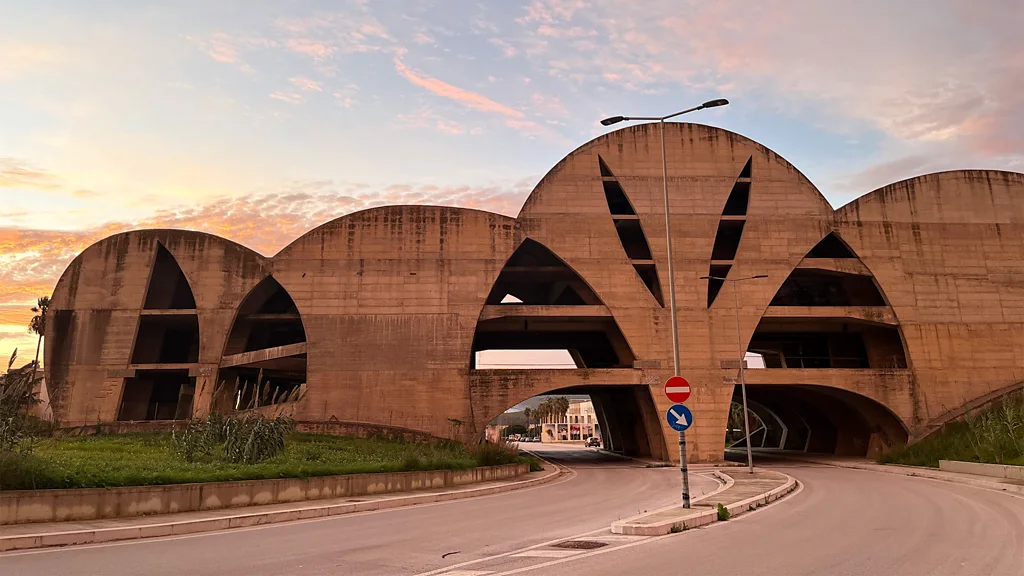 Teatro was conceived as a radical civic space but was never fully completed and remained largely unused for decades (Credit: Catherine Bennett)
"Right now, this is just a sculpture – we want to turn it into a building," he told me, explaining that Teatro would keep its industrial grittiness but be made safe for visitors. The inaugural show in the space will be video installations by the Italian artistic duo Masbedo and the Albanian artist Adrian Paci. It's part of a wider programme in which artists are encouraged to include the town and its abandoned buildings in their art. In May, for example, the artists Francesco Lauretta and Luigi Presicce will combine open-to-all drawing classes in public spaces with performances at symbolic architectural sites around the town.
The ambitious programme marks what could be described as a third renaissance for the town. Old Gibellina was destroyed after an earthquake ripped through western Sicily's Belice Valley on 14 January 1968, killing around 400 people and rendering almost 100,000 in the surrounding area homeless. The Italian government declared a national emergency and vowed to rebuild, selecting a new site 10km (6 miles) away between a planned motorway and a railway line. But relief and reconstruction were agonisingly slow, mired in corruption, bureaucracy and general indecision. Different plans were drawn up and discarded, even after building work had already begun. Thousands of people ended up living in temporary camps for more than a decade.
The result bore little resemblance to the bucolic farming village that had stood before. Engineers and urban planners imported ideas from the "New Town" movement, replacing the winding streets with wide, car-friendly avenues and swapping the tightly packed houses tumbling down the hillside for carbon-copy villas with individual parking spaces.
"The huge mistake made by the state was to copy urban models found in northern Europe, which were designed to respond to the needs of rapidly growing industrialised cities. But Sicily never had an industrial revolution," said Alessandra Badami, an architecture professor at the University of Palermo. "Suddenly residents found themselves in an urban landscape that was like nothing they had ever seen before."
 The ruins of the original Gibellina, abandoned after the 1968 earthquake, sit in contrast to the ambitious modern town built several kilometres away (Credit: Getty Images)
With limited job opportunities in the new town, the population began to drift away. That's when the charismatic mayor Ludovico Corrao made the radical decision in the 1970s to inject art into Gibellina, inviting well-known artists and architects to transform the town with public artworks. Gibellina has since been likened to the Texan art hub of Marfa for its density of contemporary works and postmodern architecture. The result is a strange utopian landscape that's neither American suburbia nor rural Italy.
Gibellina is small; visitors don't need more than a couple of days. There are a handful of restaurants and bars, along with some small but dynamic art-focused museums. But the real appeal is its sheer concentration of artworks. Turn almost any corner and you'll encounter an unusual building, arresting sculpture or a two-storey photograph pasted on an apartment block. When I wandered through its streets on a brisk evening, the town felt like a relic from another era, the Brutalist concrete skeletons of buildings seeming at once outmoded and futuristic.
One of the most astonishing works is the Chiesa Madre, a design for the town church, which took 25 years to complete. I first saw it at night when its glass doors formed a rhombus of greenish light at the top of a long flight of steps. Around the back, a vast concrete sphere hung like an enormous Christmas ornament, glowing white against the dark backdrop of the town. It felt ghostly; an alien structure dropped in the Sicilian interior. Alongside its role as the local church, it will host a photography exhibition by the photographer Francesco Bellina in September.
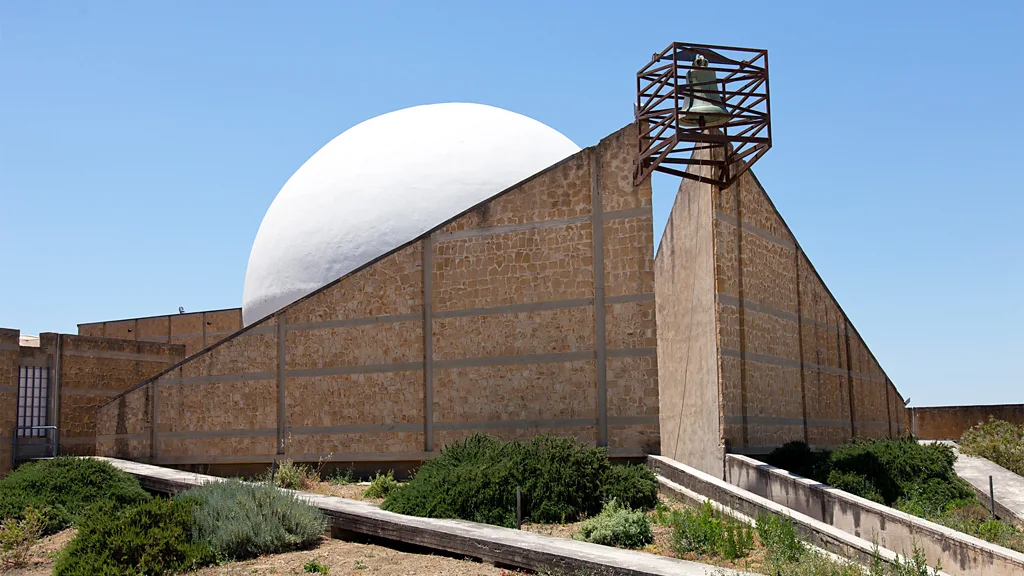 The astonishing Chiesa Madre symbolised the ambition behind Gibellina Nuova – but not all residents embraced the vision (Credit: Getty Images)
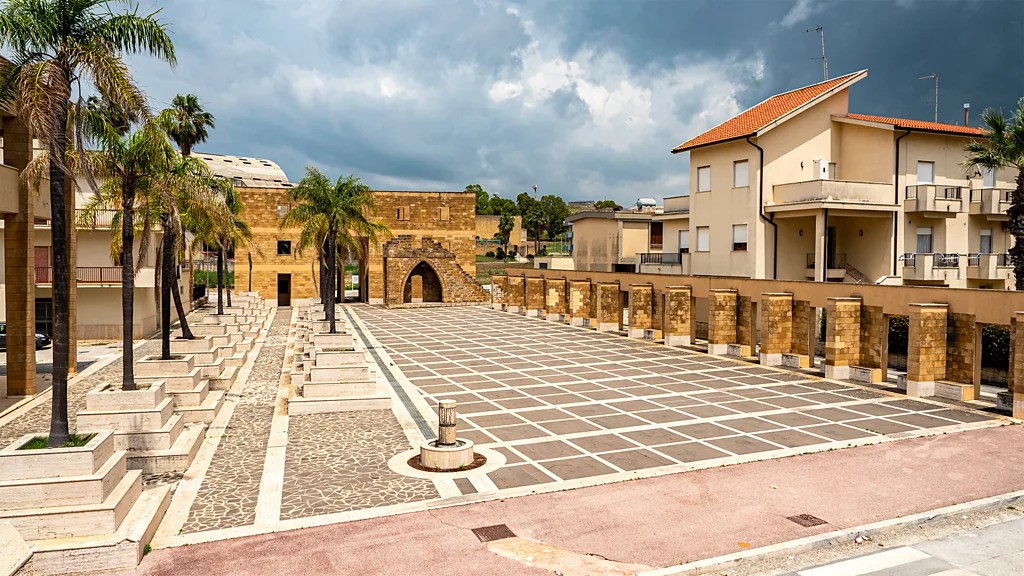
Much of Gibellina feels like an urban wilderness. Locals told me that few residents use the Sistema delle Piazze, a sequence of stark rectangular plazas designed by architects Franco Purini and Laura Thermes to serve as the town's communal heart. When I visited, empty beer bottles littered a stairwell behind a padlocked gate leading up to the piazza's balcony and stray dogs drank from puddles in the empty fountains.
Badami says Gibellina's public spaces may be architecturally brilliant, but it is precisely that lofty architectural language that repels residents. "Purini and Thermes' piazza is fantastic, like stepping into a De Chirico painting. But a city is not a painting. Squares need activity. You go to a square because there are benches, a newsstand, shade, a place for children to play."
Organisers hope that art and participatory events can draw residents back, and the Sistema delle Piazze is one of the public areas that will be cleaned up to host walks and free events. From July, visitors can also visit a public installation by the Kosovar artist Sislej Xhafa, whose conceptual sculptures will also aim to "repopulate" the square.
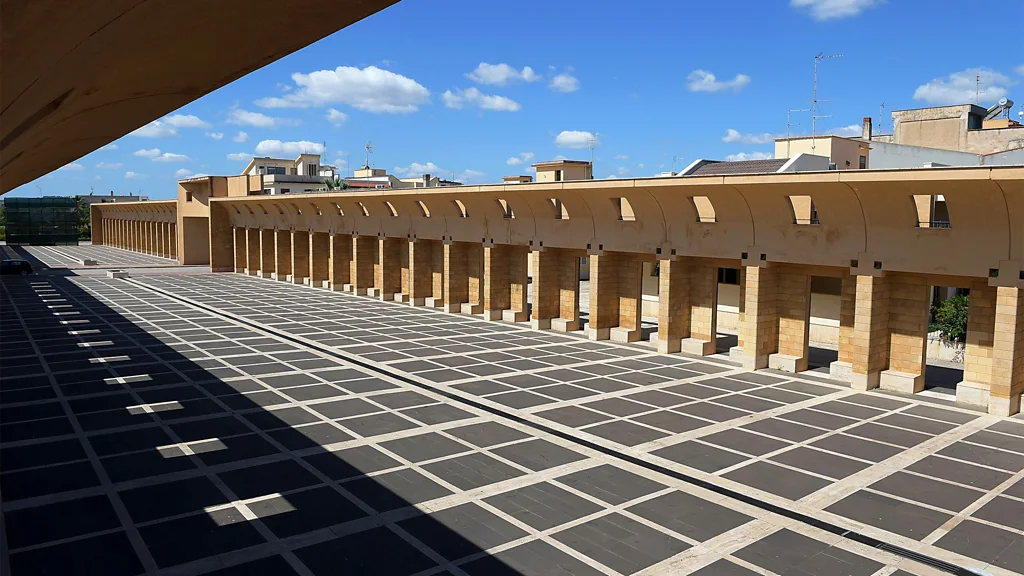 Once imagined as the town's social core, the Sistema delle Piazze now sits at the centre of ongoing efforts to rethink how its public spaces are used (Credit: Alamy)
Cusumano is pragmatic about what the town's new art designation can achieve. "My aim is not to transform Gibellina into a town for tourists who love contemporary art, but to create a community for artists," he said. "That seems more probable than luring back residents who have left. We want to make something sustainable enough to keep going long after the year has ended."
More like this:
• Inside Italy's secret mosaic school
Not everyone is convinced. Local artist Nicolò Stabile was just one year old when the earthquake hit and spent his childhood living in temporary housing, growing up in parallel with the town's construction. Fiercely attached to Gibellina, he thinks the local authorities are incapable of managing and preserving the town's artistic heritage.
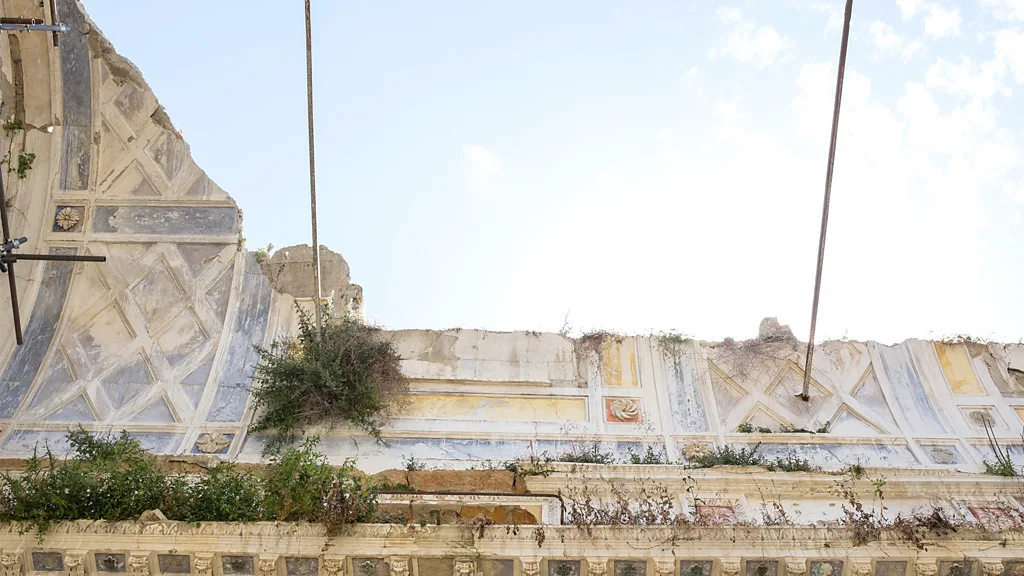
"They don't speak the language of contemporary art and have been unable – or unwilling – to continue what Corrao started," he said, leading me into the Palazzo di Lorenzo, a building designed by Italian architect Francesco Venezia that preserves the facade of a building from Old Gibellina at its centre, and which has fallen into disuse. We walked through its looping interior as a violet-pink sunset bloomed across the sky and pulled chicken wire to one side to pass through a doorway, startling pigeons who spooked above our heads.
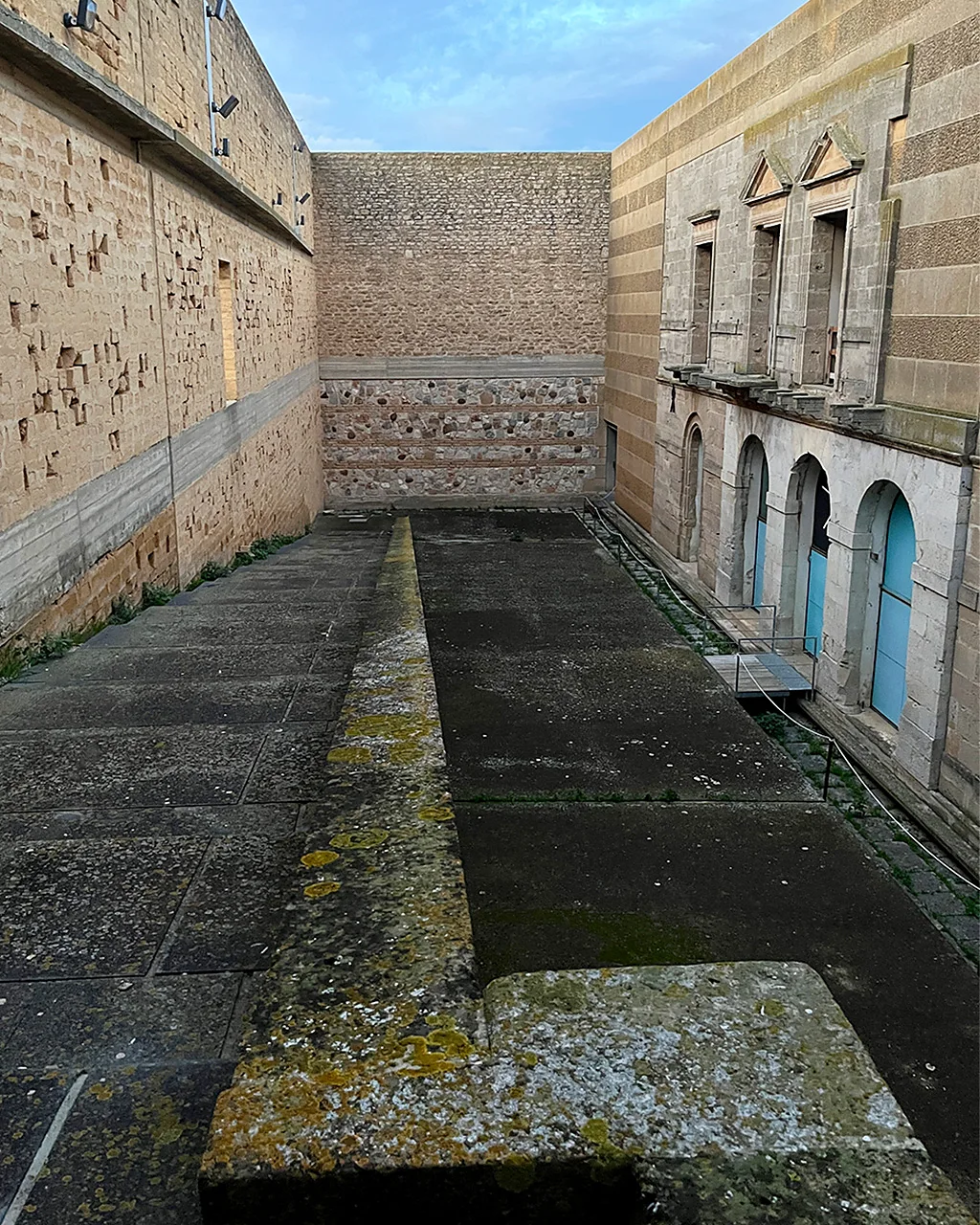 This year, exhibitions and installations will bring new life to many of Gibellina's abandoned spaces (Credit: Catherine Bennett)
On the lower floor, Stabile flicked on the lights to illuminate a frozen-in-time installation from a 2019 photography exhibition by Moira Ricci, complete with curatorial texts. It was another example of how easily art here slips back into neglect.
"As soon as the year is over, all the buildings will close again. I'm sure of it," Stabile said.
Whether that prediction proves true remains to be seen. In the meantime, artists are arriving, scaffolding is going up and long-abandoned spaces are being prepared for use. Gibellina may never resolve the contradictions it was built upon, but in 2026 it will once again be animated by the very thing that defined its beginnings: art.
--
If you liked this story, sign up for The Essential List newsletter – a handpicked selection of features, videos and can't-miss news, delivered to your inbox twice a week.
For more Travel stories from the BBC, follow us on Facebook and Instagram.
The most anticipated restauran
From flame-seared dishes in Mexico to avant-garde cooking in India, these six new restaurants are worth travelling for this year.(2 )Readerstime:2026-02-14
The secretive islands behind t
Remote and off-limits to tourists, Chagos is a paradisiacal slice of the tropics that‘s home to one of the most pristine reef systems on Earth. So why are they ...(2 )Readerstime:2026-02-13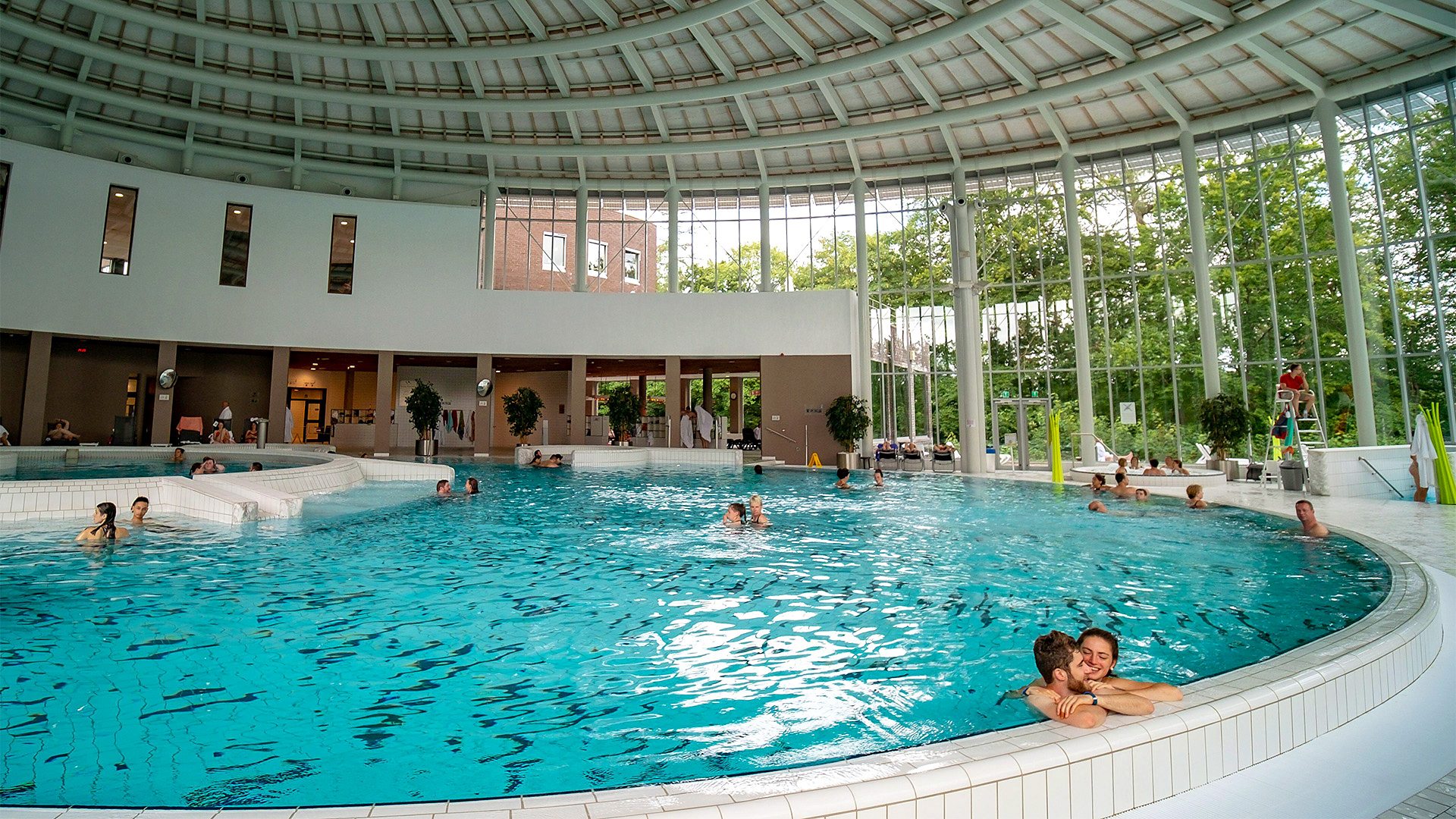
The town that launched a globa
Long before wellness became a global industry, a small town in eastern Belgium shaped how Europeans thought about health, leisure and water.(2 )Readerstime:2026-02-12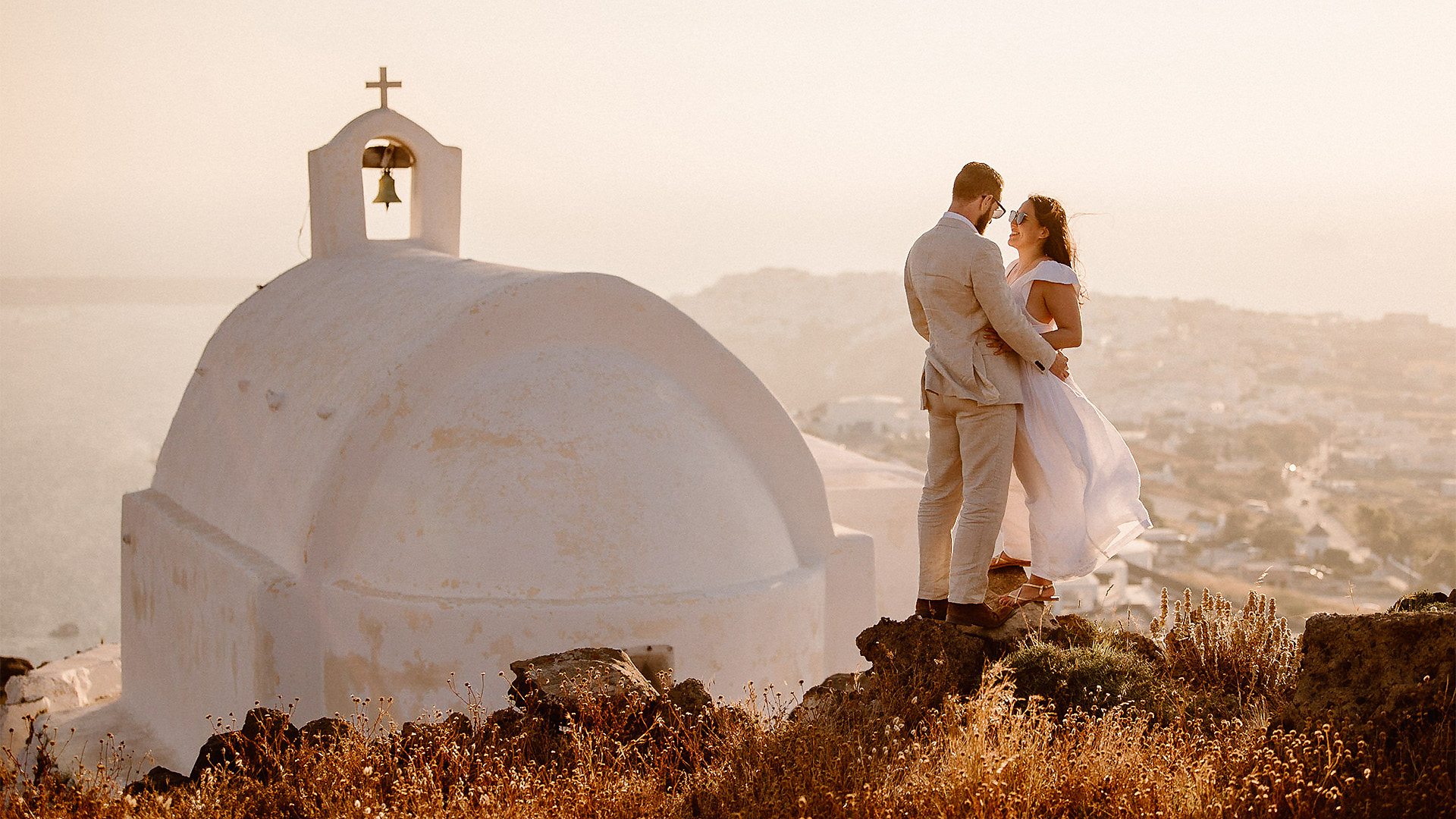
Where to elope in 2026
Once furtive affairs, elopements now happen in spectacular destinations and have become an increasingly popular way for couples to embark on the adventure of ma...(3 )Readerstime:2026-02-11How Trump is disrupting global
 Some travellers are now second-guessing whether it‘s safe to visit destinations the US has recently threatened.2026-01-12
Seven new Bridgerton filming l
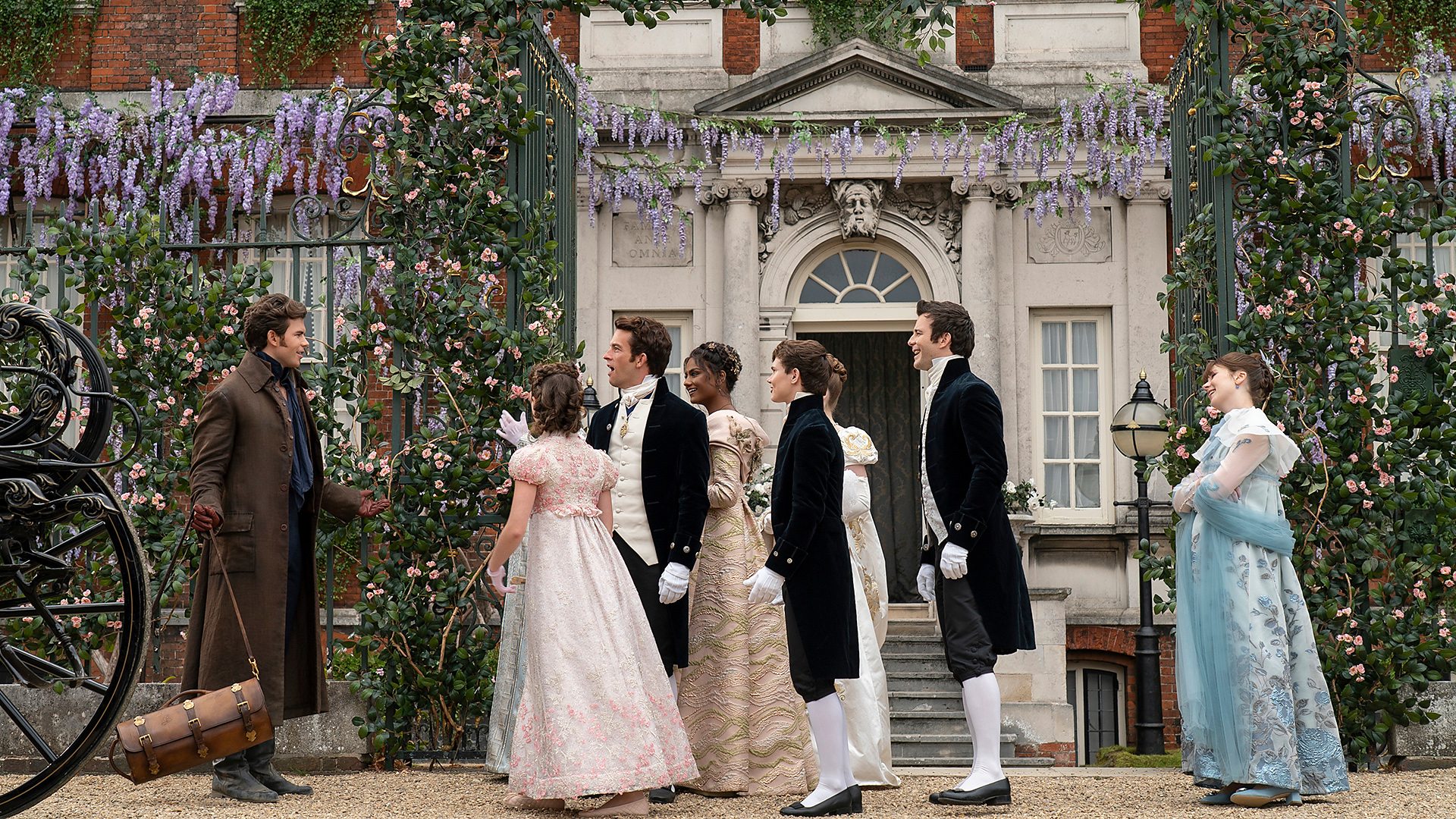 Bridgerton is back, and from London palaces to Bath ballrooms, here are some of the best places to experience Regency-era England.2026-01-26
The biggest all-you-can-eat bu
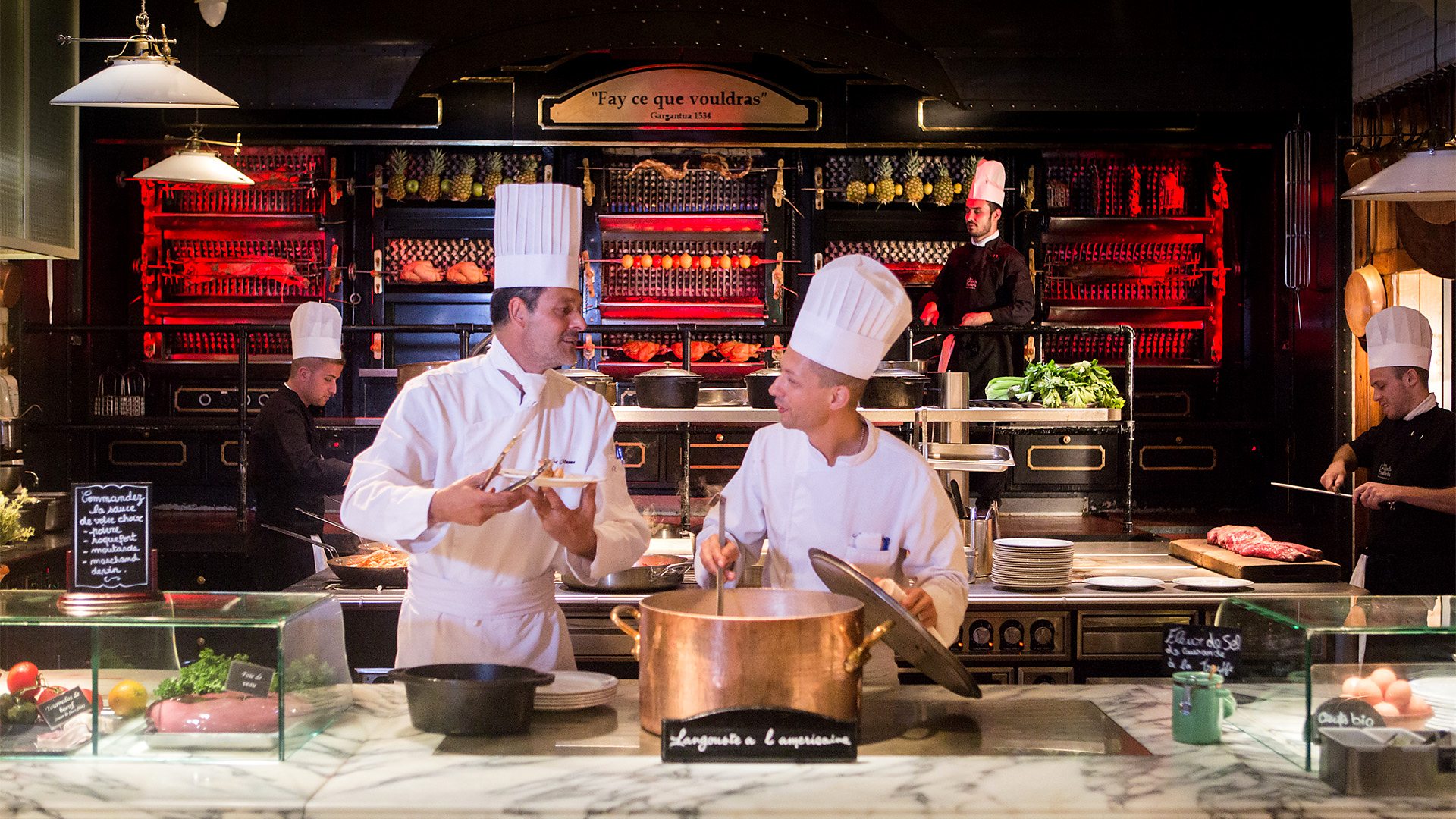 France‘s highest-grossing restaurant isn‘t a Michelin-starred bistro or a Parisian institution, but an all-you-can-eat buffet on the outskirts of Narbonne.2026-01-20
Europe's new steamy, semi-nude
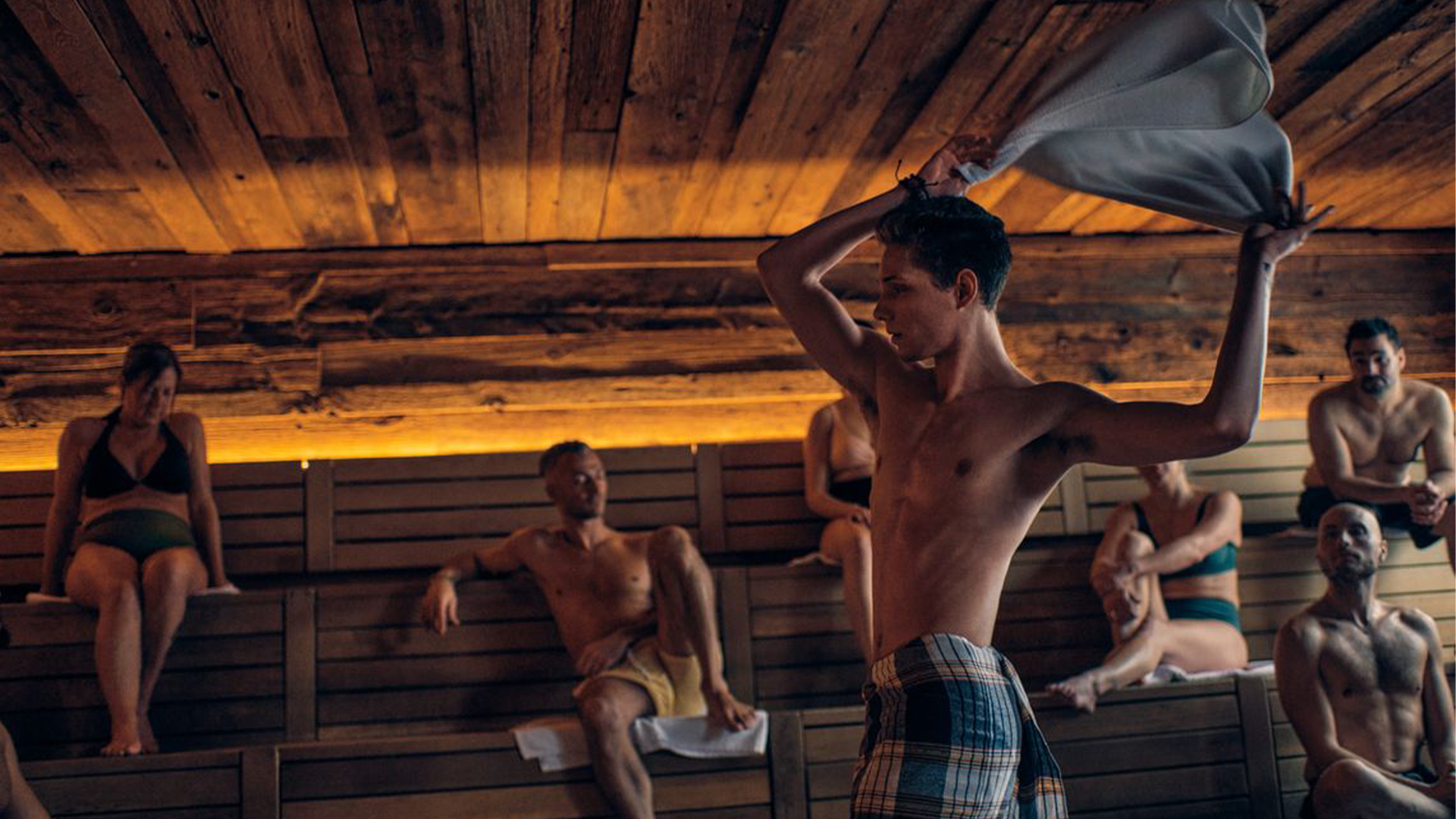 As saunas gain global popularity, a hypnotic offshoot involving theatre, music and towel-twirling known as "Aufguss" is attracting wellness-seekers across the w...2026-01-13