

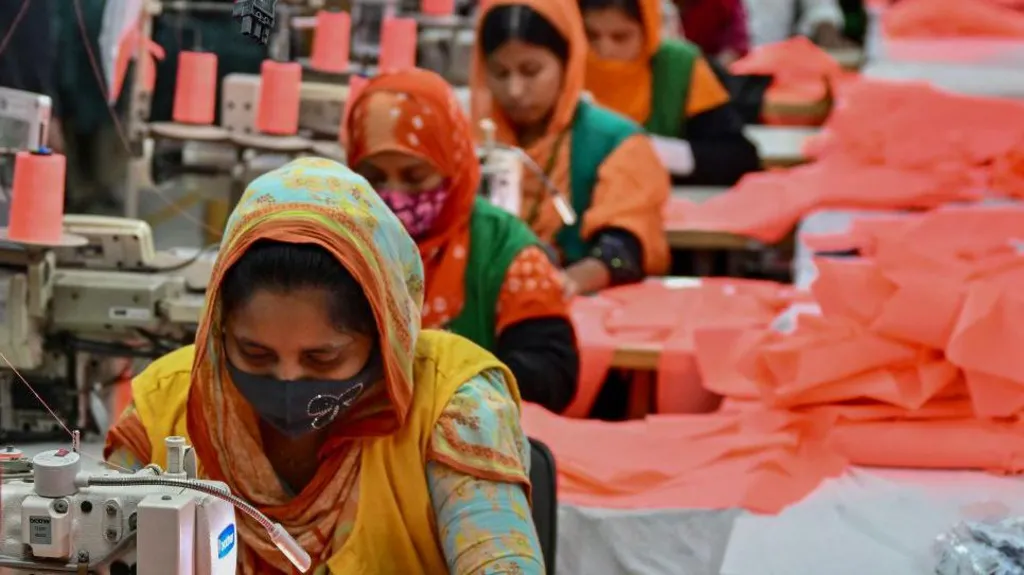
 Bangladesh is a major producer of clothes
Bangladesh has secured exemptions for some clothes and textiles that are made with US-produced materials, as part of a new agreement announced on Monday.
As part of the deal, Washington will also cut its tariffs on Bangladesh from 20% to 19%, in exchange for Dhaka to open its markets to a wider range of American goods.
The apparel industry forms the backbone of Bangladesh, which is the world's second largest exporter of clothes after China.
The South Asian country has been in long-drawn talks with the White House after President Donald Trump imposed sweeping tariffs on global trading partners in April last year.
The White House said in a joint statement between the sides that the agreement will strengthen the countries' economic ties and offer both "unprecedented access" to each market.
It said the US will lower its tariff rate on Bangladesh and will also identify certain clothing and textile goods from the country to enter the US free of tariffs.
The goods include those produced with American cotton and man-made textiles, the statement said. The volume of these will be determined by how much textiles the US exports to Bangladesh.
The clothing sector accounts for more than 80% of Bangladesh's total export revenue and employs around four million workers.
In exchange, Bangladesh has agreed to provide "significant preferential market access" to a host of American agricultural and industrial goods. These include opening up its markets to more US chemicals, medical devices, car parts, soy products and meat, said the White House.
The BBC has contacted the Bangladeshi government for comment.
As part of the agreement announced on Monday, Dhaka will recognise American food and drug and vehicle safety and emission rules, making it easier for US goods to enter the country.
Bangladesh also committed to observe internationally recognised labour rights, ramp up its environmental protection efforts, and uphold its agreement to buy billions of dollars of American agriculture, aircraft and energy products, according to the statement.
Bangladesh is set to head to the polls on Thursday for general elections.
The country has been led by an interim government since 2024, when former Prime Minister Sheikh Hasina fled to India after being ousted over the fatal crackdown on student-led protests.
The US's newly announced tariff cut puts Bangladesh nearly level with its neighbour and regional competitor India, which faces an 18% levy from the US.
Both South Asian countries compete to export clothes, footwear, along with agricultural goods.
India was initially hit with 25% US levies when Trump announced his first round of reciprocal tariffs in April 2025. Bangladesh, on the other hand, was given a 37% tariff.
Is dining out dying out?
The restaurant industry says it is facing a double whammy - rising costs and customers with less money.(2 )Readerstime:2026-02-14
Heathrow not crowded but peopl
Chief executive Thomas Woldbye says Europeans and Brits keep "crashing into each other" because they walk on different sides.(2 )Readerstime:2026-02-14
Inflation eases in US as price
Prices rose by 2.4% in the year to January, the latest official figures show, the slowest pace since May.(2 )Readerstime:2026-02-13
Hello Kitty designer steps dow
Yuko Yamaguchi oversaw the feline character‘s rise to to global icon status.(2 )Readerstime:2026-02-13US government invests $1.6bn f
 The deal is the Trump administration‘s latest attempt to reduce its reliance on China.2026-01-27
US jobs see surprise growth in
 Employers added a greater than expected 130,000 jobs in January, according to the latest figures.2026-02-11
Warning of long airport queues
 Airport organisation says queues could last up to six hours over the summer holidays.2026-02-05
Why Target is under fire over
 Workers are writing letters, staging strikes and in some cases resigning over how bosses are handling the immigration crackdown.2026-02-05