

Thailand has voted in an early election called after multiple coalition governments collapsed, giving the country three prime ministers in as many years.
Just like in 2023, this election pits those advocating far-reaching change, the People's Party, against conservative forces led by incumbent PM Anutin Charnavirakul.
When the young reformers won last time the military-appointed senate barred them from forming a government and the constitutional court dissolved the party. Powerful, unelected forces have repeatedly intervened to block parties challenging the status quo in Thailand.
Results will become clear around 22:00 local time (15:00 GMT), but no party is likely to win a majority.
The big question hanging over this election is how well the People's Party, which has been leading the polls, performs.
It is facing a strong challenge from Anutin, who has built his once small, provincial Bhumjaithai - "Thai Pride" party - into the standard-bearer for Thai conservatives.
He has played on patriotic sentiment after the two short border wars with Cambodia last year, and promising to defend the status of traditional Thai institutions like the monarchy and military.
The third main contender is the Shinawatra family and its Pheu Thai – "For Thais" – party. In the past it dominated elections, with well-marketed populist policies. It has promised to create nine new millionaires – in Thai baht – every day through a national prize draw. Both Bhumjaithai and Pheu Thai have offered subsidies and cash handouts to voters.
Pheu Thai, however, is expected to lose significant support in this election after its last coalition administration was accused of mishandling the conflict with Cambodia, and its patriarch, former PM Thaksin Shinawatra, was sent to jail.
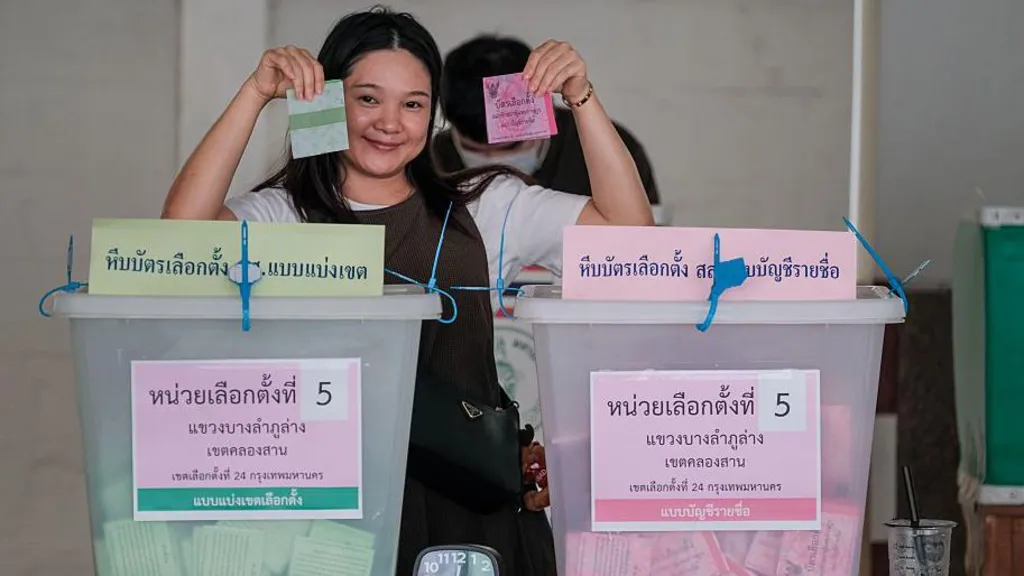 Thais were voting throughout Sunday
Thailand's once dynamic economy has ground to a halt as political instability and the lack of structural changes worry foreign investors. Voters, meanwhile, are concerned about rising costs.
"I want the economy to improve and I don't want big factories to relocate to our neighbouring countries," civil servant Phananya Bunthong told the BBC, a reference to Thailand falling behind Vietnam.
The People's Party - led by Nattaphong Ruengpanyawut - is certainly promising big changes, from curbing the power of the biggest businesses and military, to streamlining the extensive bureaucracy and modernising the education system.
But in Thailand simply winning an election is not enough.
Two previous incarnations of the People's Party were dissolved by the court, and their leaders banned from politics.
They are not the only ones to have been subjected to intervention by the constitutional court, and other unelected conservative institutions. Five Pheu Thai prime ministers have been dismissed by the court since 2008, and two earlier incarnations of the party have been dissolved.
But if the People's Party exceeds the 151 seats it won in 2023, it may prove difficult to bar it from forming a government. This is despite the great unease about its radical agenda in conservative and royalist circles.
At that point yet more intervention by the courts or other bodies is expected to weaken or disable it as a political force. But if Anutin and Bhumjaithai can match or exceed the seat total of the reformists, with the conservative establishment behind him he is very likely to remain prime minister.
Besides the election, Thais are also voting in a referendum on whether to reform the 2017 constitution, which was drafted under military rule in 2017 - many Thais and critics of the charter believe it gives too much power to unelected forces like the senate, "handcuffing" the country's democracy.
"I want change. I don't want things to be the same," 28-year-old Kittitat Daengkongkho told the BBC.
That, in effect, was the choice Thai voters were presented with in this election: sweeping change, or more of the same.
After the landslide: Can India
A reset of the frayed relationship is possible, say analysts. But it will require restraint - and reciprocity.(2 )Readerstime:2026-02-15
On TikTok, we're all Chinese –
Chinamaxxing is adding more gloss to the recent flourish of Chinese soft power.(2 )Readerstime:2026-02-15
Why writer Arundhati Roy's cul
Nearly 40 years on, the Booker prize-winning writer‘s debut campus satire is set to be screened in Berlin.(2 )Readerstime:2026-02-14
Can Bangladesh's new leader br
Tarique Rahman is set to be Bangladesh‘s next prime minister, 18 months after mass protests ousted its longest-serving leader.(2 )Readerstime:2026-02-14Kim Jong Un chooses teen daugh
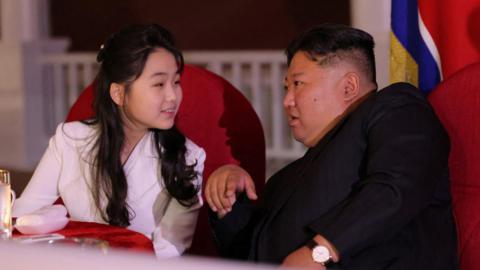 South Korea‘s spy agency says Ki Ju Ae‘s prominent public presence indicates she is the chosen heir.2026-02-12
AirAsia accused by artist for
 A Penang-based street artist says his work has been "reproduced" as part of a livery on an aircraft2026-02-13
Twenty years is 'a death sente
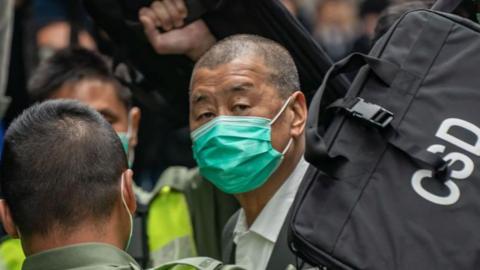 A Hong Kong court sentences the 78-year-old British citizen Jimmy Lai to 20 years in prison after he was found guilty of national security offences last Decembe...2026-02-10
Polls close in first election
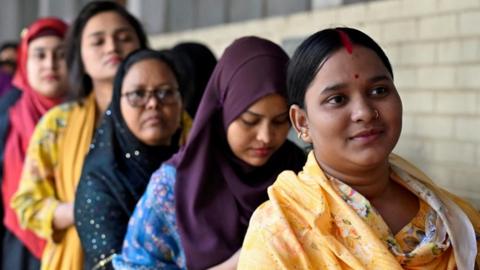 Voters are hoping for a return to democracy after 15 years of authoritarian rule under Sheikh Hasina.2026-02-12