

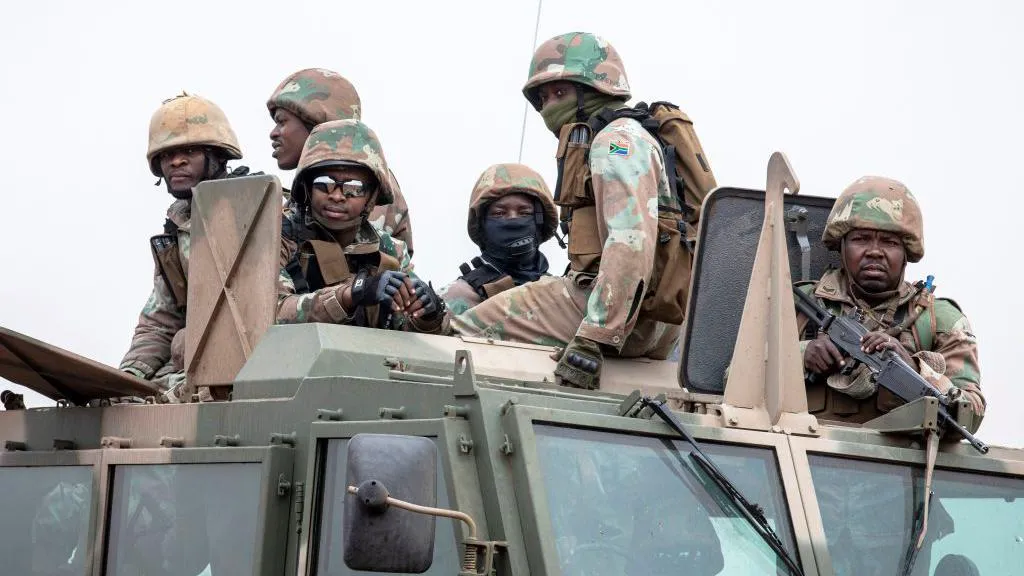
 Soldiers will be deployed to the Western Cape and Gauteng, provinces hard hit by gang violence and illegal mining respectively
South African President Cyril Ramaphosa said he will deploy the army to help the police fight criminal gangs and illegal mining in the country.
Gang violence is a major problem in South Africa, which has one of the world's highest murder rates.
"Organised crime is now the most immediate threat to our democracy, our society and our economic development," Ramaphosa said in his annual State of the Nation Address (Sona) on Thursday.
"I will be deploying the South African National Defence Force to support the police," he added.
Last month, Police Minister Firoz Cachalia said the country's police were not yet able to defeat the deadly criminal gangs, in a stark admission that underscored the scale of the country's crime crisis.
In his address to parliament, Ramaphosa said he had directed the chiefs of the police and army to draw up a plan on where "our security forces should be deployed within the next few days".
He said the military deployment would start in the provinces of Western Cape and Gauteng, home to the cities of Cape Town and Johannesburg, because of rising gang violence and illegal mining respectively.
"Children here in the Western Cape are caught in the crossfire of gang wars. People are chased out of their homes by illegal miners in Gauteng," said Ramaphosa.
Authorities blame illegal miners, known as "zama zamas", typically armed, undocumented foreign nationals, for their involvement in organised crime syndicates.
Ramaphosa ruled out deploying troops to Cape Town just two weeks ago, saying soldiers were trained for combat and not community policing. He did not explain why he changed his mind but there have been increasing calls for him to take action to tackle gang violence.
Beyond the military deployment, Ramaphosa announced additional measures to combat crime, including recruiting 5,500 police officers, strengthening intelligence, and targeting crime syndicates.
South Africa, the continent's most industrialised nation, has long struggled with entrenched organised crime.
Police data shows that an average of 63 people were killed each day between April and September last year.

Go to BBCAfrica.com for more news from the African continent.
Follow us on Twitter @BBCAfrica, on Facebook at BBC Africa or on Instagram at bbcafrica
Motorbike raids on villages ki
Assailants shot dead or cut the throats of their victims, lit homes on fire and abducted multiple people in Niger state, Nigeria.(2 )Readerstime:2026-02-15
Planned US-funded baby vaccine
Giving some newborns in Guinea-Bissau an established hepatitis B treatment but not others is "unethical", it says.(2 )Readerstime:2026-02-15
Sudan war crimes saw 6,000 kil
Paramilitary Rapid Support Forces (RSF) committed the atrocities in the city of el-Fasher, says a UN report.(2 )Readerstime:2026-02-14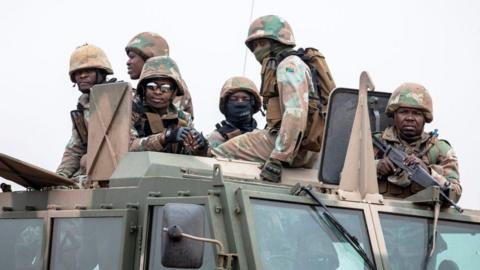
South Africa to deploy troops
President Cyril Ramaphosa says the army will work with the police to fight organised crime and illegal mining.(2 )Readerstime:2026-02-13A singer's tragic death highli
 The crisis is compounded by a critical shortage of affordable, properly stored antivenom.2026-02-08
Influential Ghanaian highlife
 The guitarist, composer and band leader fused Ghanaian music and funk to create tracks sampled around the world.2026-02-09
How off-the-shelf drones are c
 Insurgents have carried out a wave of drone strikes on military positions in the region.2026-02-09
Nigerian court orders UK to pa
 The colonial police, made up of Nigerians and Europeans, shot dead workers striking for better conditions.2026-02-06